-
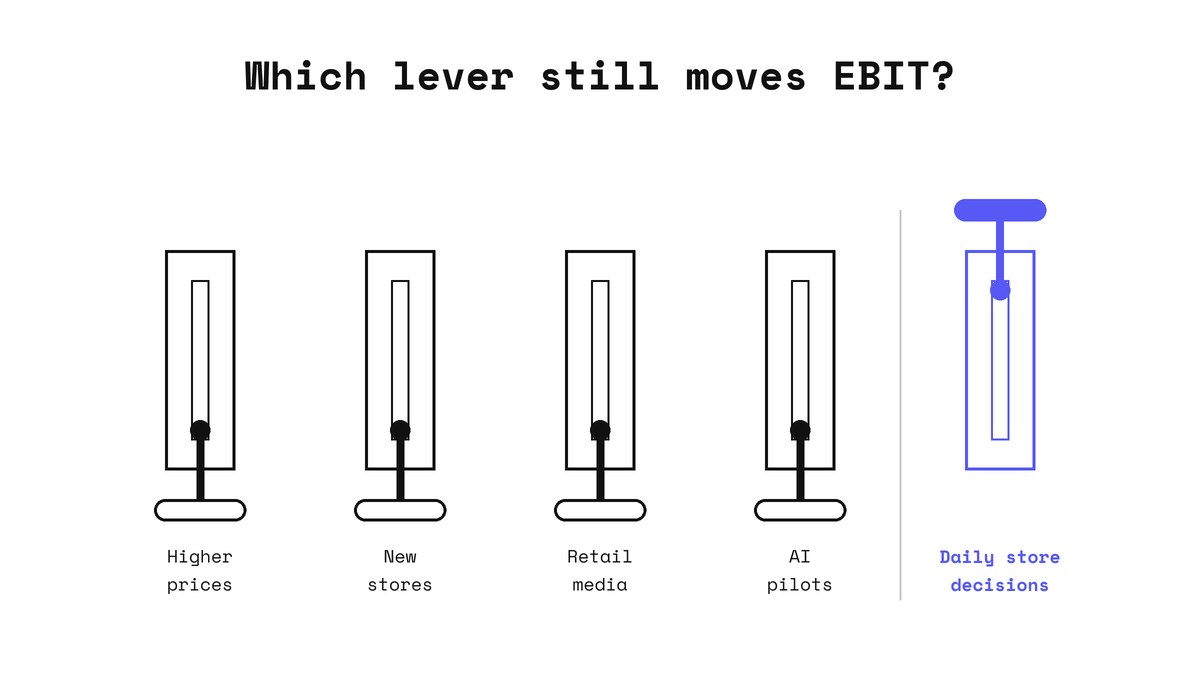
How to Improve Grocery EBIT Margin in Stores
TL;DR: Europe’s grocery EBIT margin sat at 2.8% in 2024 and again in 2025. For the fifth year running, cost and margin pressure is the top concern for grocery CEOs — 77% name it as a top-of-mind focus area. It is not for lack of trying. Labour costs are rising faster than food prices, shoppers…
-
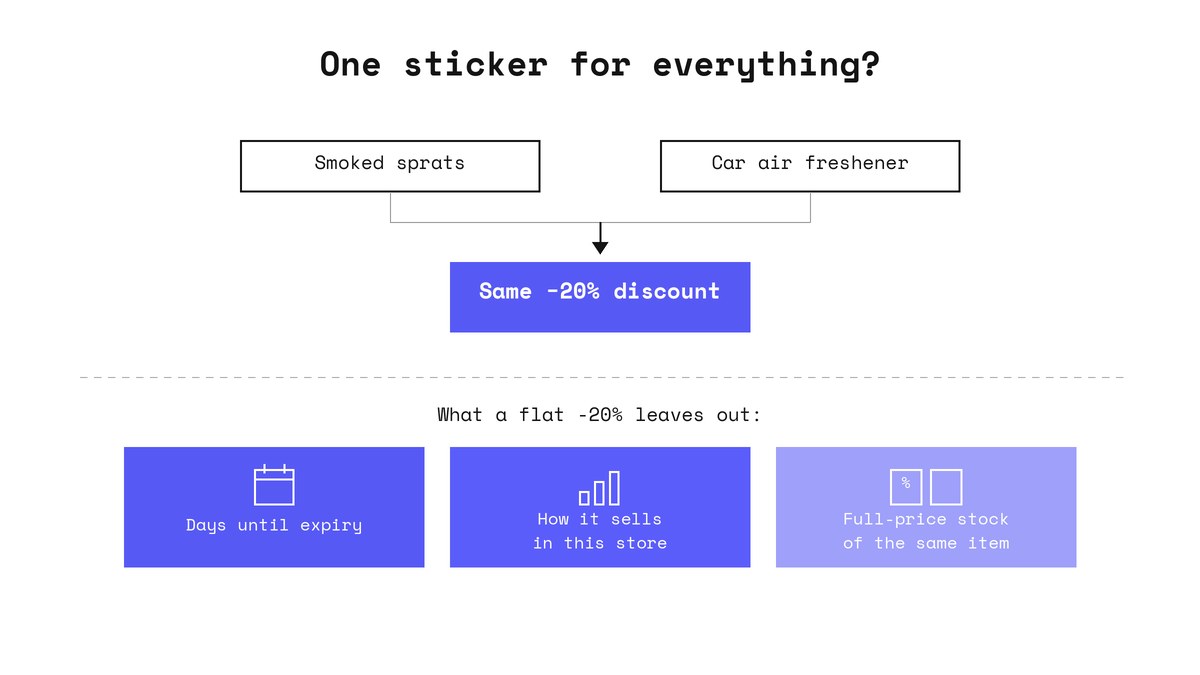
Grocery Markdown Strategy: Can One Sticker Fit Everything?
TL;DR: Many grocers run a simple grocery markdown strategy: one discount for everything that has to go. In one Lidl “Rette mich” bin, smoked sprats and a car air freshener carry the same −20% sticker. That flat rule is a smart trade-off: fast, easy to train and the same in every store. What it leaves…
-
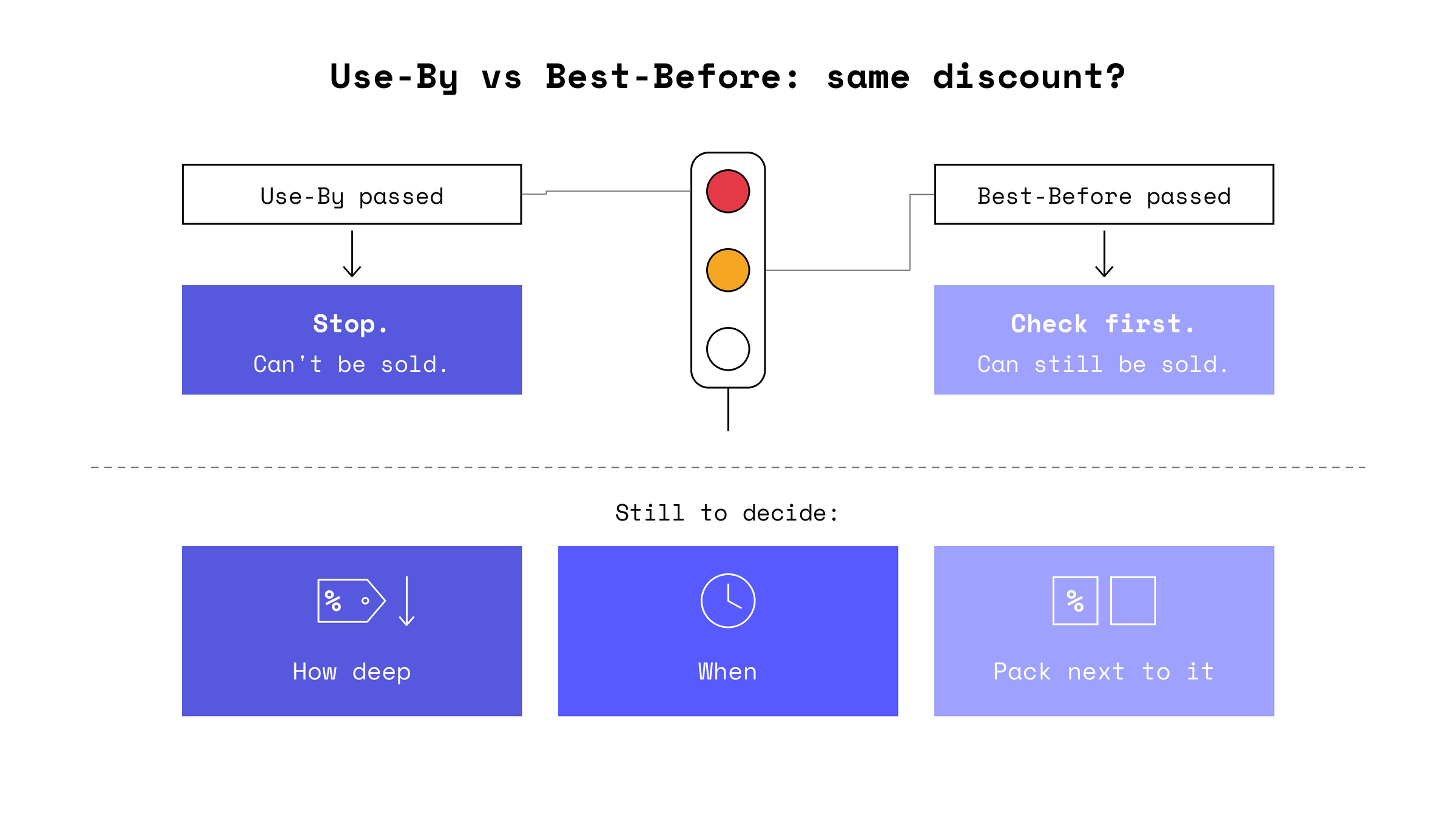
Use By vs Best Before: Should Both Get the Same Discount?
TL;DR: Use by vs best before is not only a shopper question. For a store, a passed Use-By date is a red light: the pack can’t be sold. A passed Best-Before date is a yellow light: check first. If the product is still fine and the passed date is clearly pointed out, it can be…
-

Sunrise 2027: Having the Data Is Easy. Acting on It Is the Hard Part.
TL;DR: Sunrise 2027 is a GS1 industry target: by the end of 2027, supermarket checkouts should be able to read 2D codes. The minimum is the product number (GTIN). Expiry date and batch are optional, and the product’s owner decides whether to put them in the code. Where they are in the code, a store…
-
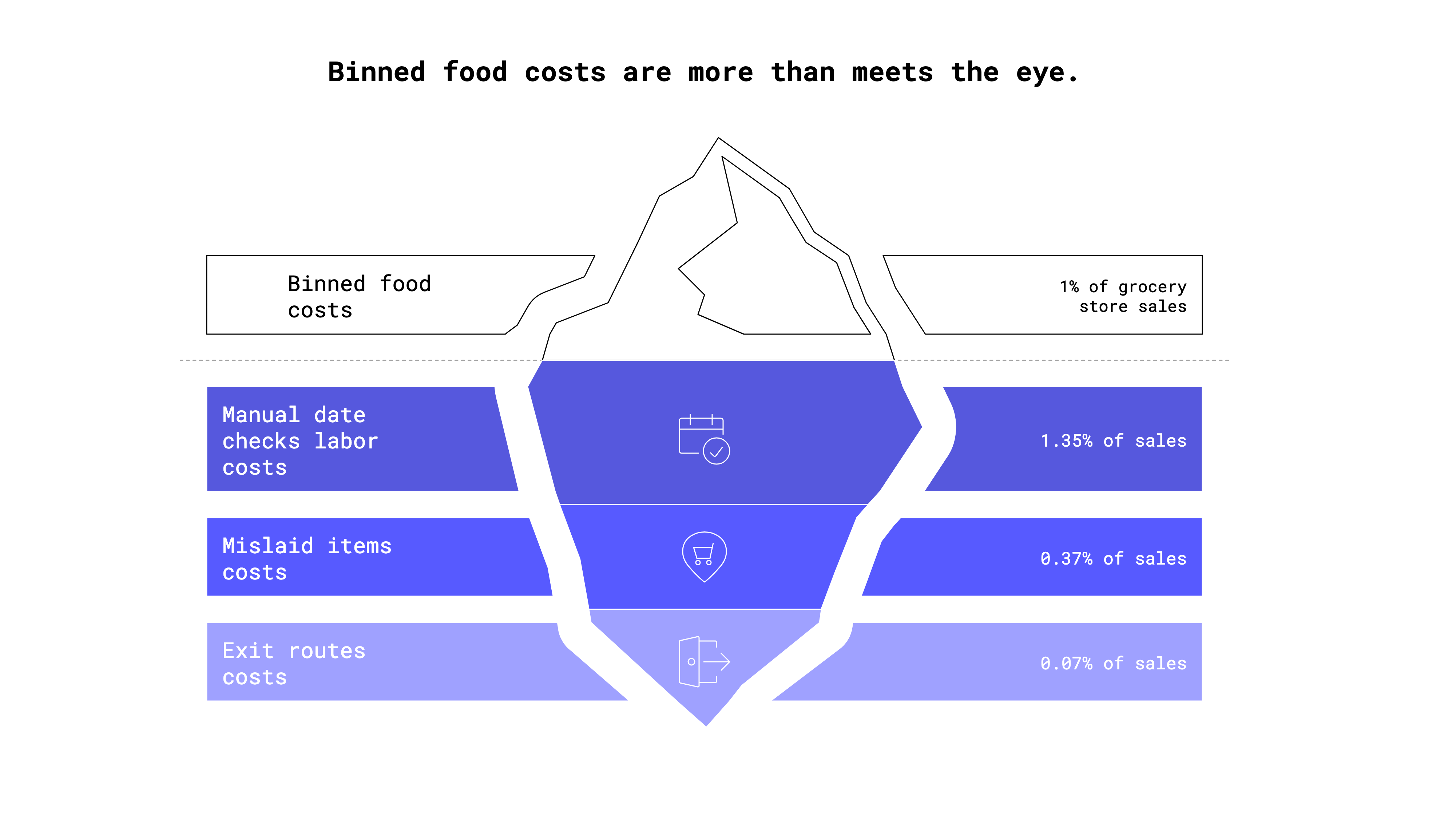
How Much Does Food Waste Really Cost a Supermarket?
The food waste cost a supermarket carries is about 2.8% of sales. About 1% is the purchase cost of food that gets binned or donated. About 1.8% goes on handling all the food that doesn’t sell at full price. That’s mostly manual date checks and markdowns. Source: ECR Retail Loss, 2025. The figures come from…
-
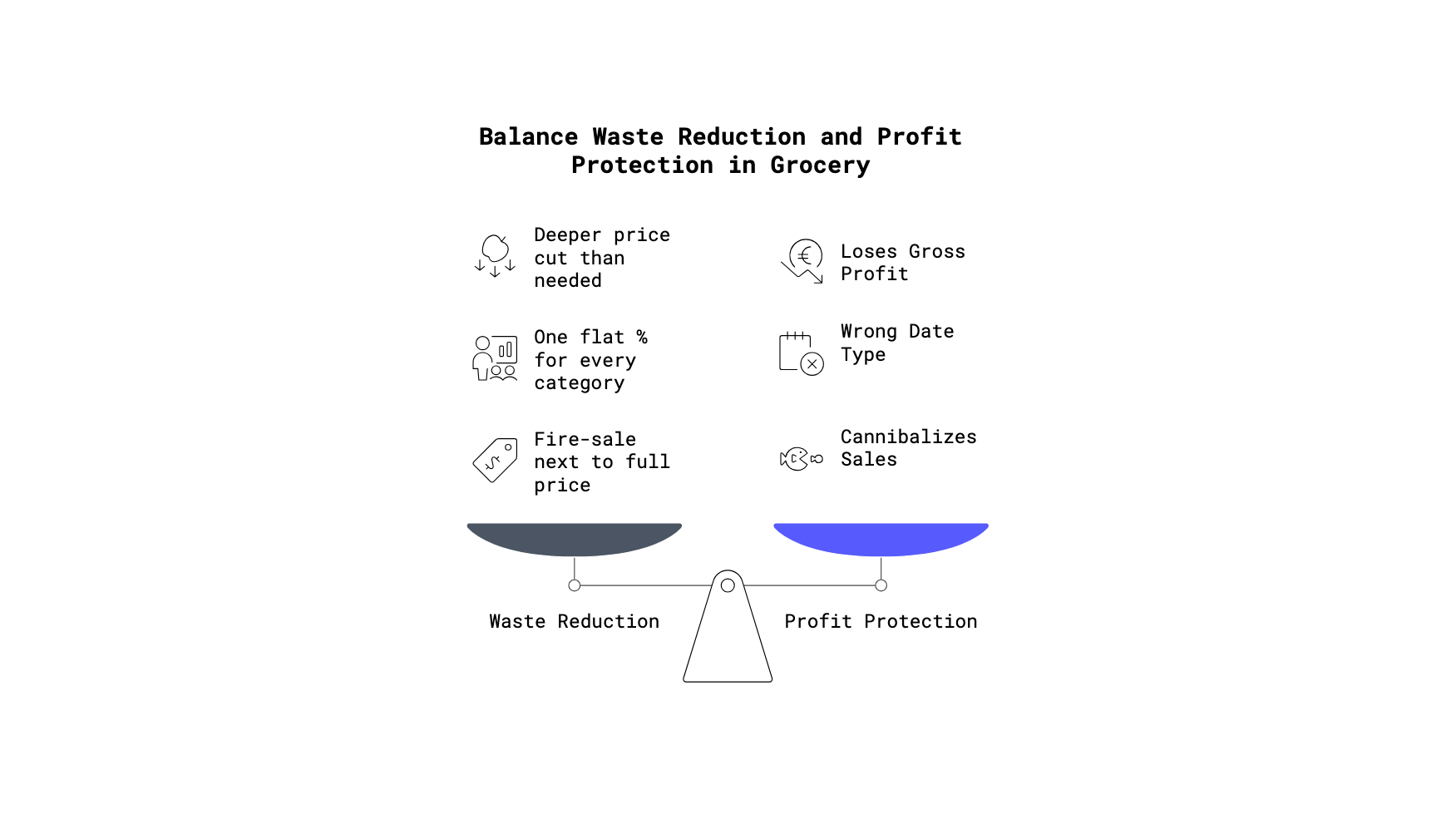
Waste down ≠ more profit: three ways a “good” markdown still loses euros
A markdown can cut waste % and still lose gross profit. Three grocery fresh patterns, a five-question checklist, and when remove beats a fire-sale.